- Introduction
Mexico’s evolving water governance framework is rapidly becoming one of the most consequential regulatory variables affecting the mining sector. On March 3, 2026, the federal government published in the Official Gazette (Diario Oficial de la Federación) the Operational Guidelines for the Water and Sanitation Incentive Program (Programa de Estímulos de Agua y Saneamiento – PEAS) administered by the National Water Commission (CONAGUA).
At first glance, the program appears focused on improving municipal water and sanitation infrastructure through the reinvestment of federal payments associated with water rights and wastewater discharge. However, when examined in the broader context of Mexico’s environmental policy, fiscal instruments, and resource governance strategy, the program signals a deeper shift in how the federal government intends to manage and monitor the country’s water resources.
For the mining industry—one of the industrial sectors for which water is indispensable—this shift carries significant regulatory, operational, and political implications.
2. Water Governance as a Strategic Policy Priority
Mexico faces increasing structural pressure on its water resources. Chronic drought conditions in northern regions, aging infrastructure, declining aquifer levels, and growing urban demand have elevated water security to a national policy priority.
The PEAS program reflects a policy approach aimed at strengthening federal oversight of water use through economic incentives linked to infrastructure reinvestment. Under the program’s framework, federal payments made for water extraction or wastewater discharge may be partially returned to eligible operators if those funds are reinvested in projects designed to improve efficiency, sanitation, or water management systems.
Although municipal utilities are the primary beneficiaries, the policy mechanism reinforces the government’s broader objective: tightening regulatory oversight of water rights, improving traceability of water use, and aligning economic instruments with environmental policy goals.
For industries dependent on water concessions—including mining—this shift suggests that water management will increasingly sit at the intersection of environmental compliance, fiscal policy, and political scrutiny.
3. The Regulatory Signals Behind the Program
Beyond its administrative structure, the PEAS program sends several important regulatory signals relevant to mining operations.
First, it reflects a renewed federal emphasis on the economic regulation of water resources. Water rights payments and discharge fees are being repositioned not merely as fiscal instruments but as policy tools to influence behavior and investment.
Second, the program reinforces the role of CONAGUA as a central regulatory authority responsible for ensuring compliance with water concessions, discharge permits, and reporting obligations.
Third, the initiative aligns with broader federal efforts to integrate water policy with environmental governance, suggesting that regulatory coordination between CONAGUA and environmental authorities may become more common in cases involving industrial water use.
Together, these signals point toward a regulatory environment in which water concessions and discharge permits will be subject to greater monitoring and enforcement.
4. Implications for the Mining Industry
Although the PEAS program does not directly regulate mining activities, its policy orientation may influence the legal and operational landscape in several ways.
Increased Oversight of Water Concessions.
Mining projects depend heavily on water concessions granted by CONAGUA for exploration, mineral processing, dust control, and other operational requirements. Companies could face more frequent verification of concession volumes, stricter validation of extraction reports, and greater scrutiny of unused or underutilized water rights.
Strengthening of Wastewater Regulation.
The reinvestment of discharge payments into improved sanitation infrastructure reinforces the government’s priority of improving water quality and strengthening oversight of industrial effluents. Mining operations involving flotation plants, heap leaching facilities, or tailings management systems may encounter increased monitoring of discharge parameters and reporting obligations.
Water as a Social and Political Risk Factor.
Public debate surrounding industrial water use has intensified in several regions of Mexico. As water becomes more central to public policy discussions, mining projects may encounter heightened expectations to demonstrate responsible water stewardship and community benefit.
5. Strategic Opportunities for Responsible Operators
Despite the regulatory challenges associated with stricter water governance, the policy shift also creates opportunities for mining companies that proactively align with national water priorities.
Mining companies have historically supported water infrastructure projects in host communities. By aligning these initiatives with federal priorities such as sanitation improvements, water efficiency, and infrastructure modernization, companies may strengthen relationships with local authorities and communities.
Additionally, the global mining industry increasingly adopts water stewardship frameworks such as Towards Sustainable Mining (TSM), the International Council on Mining and Metals (ICMM), World Gold Council´s Responsible Gold Mining Principles commitments, currently in process of consolidation as the Consolidated Mining Standard Initiative (CMSI). Operators investing in water recycling technologies, closed‑loop systems, and reduced freshwater dependency may gain regulatory and reputational advantages.
6. Looking Ahead: Water as a Core Regulatory Variable
The publication of the PEAS guidelines should be interpreted as part of a broader transition toward more structured and accountable water governance in Mexico.
For the mining industry, water management is no longer solely a technical or operational issue; it is increasingly a legal, regulatory, and strategic consideration.
Mining companies operating in Mexico would benefit from proactively evaluating their water concession portfolios, strengthening compliance systems related to water use and reporting, and integrating water stewardship into ESG and community engagement strategies.
As water scarcity continues to shape policy priorities across the country, companies that anticipate and adapt to this evolving regulatory environment will be better positioned to navigate future legal and operational risks.
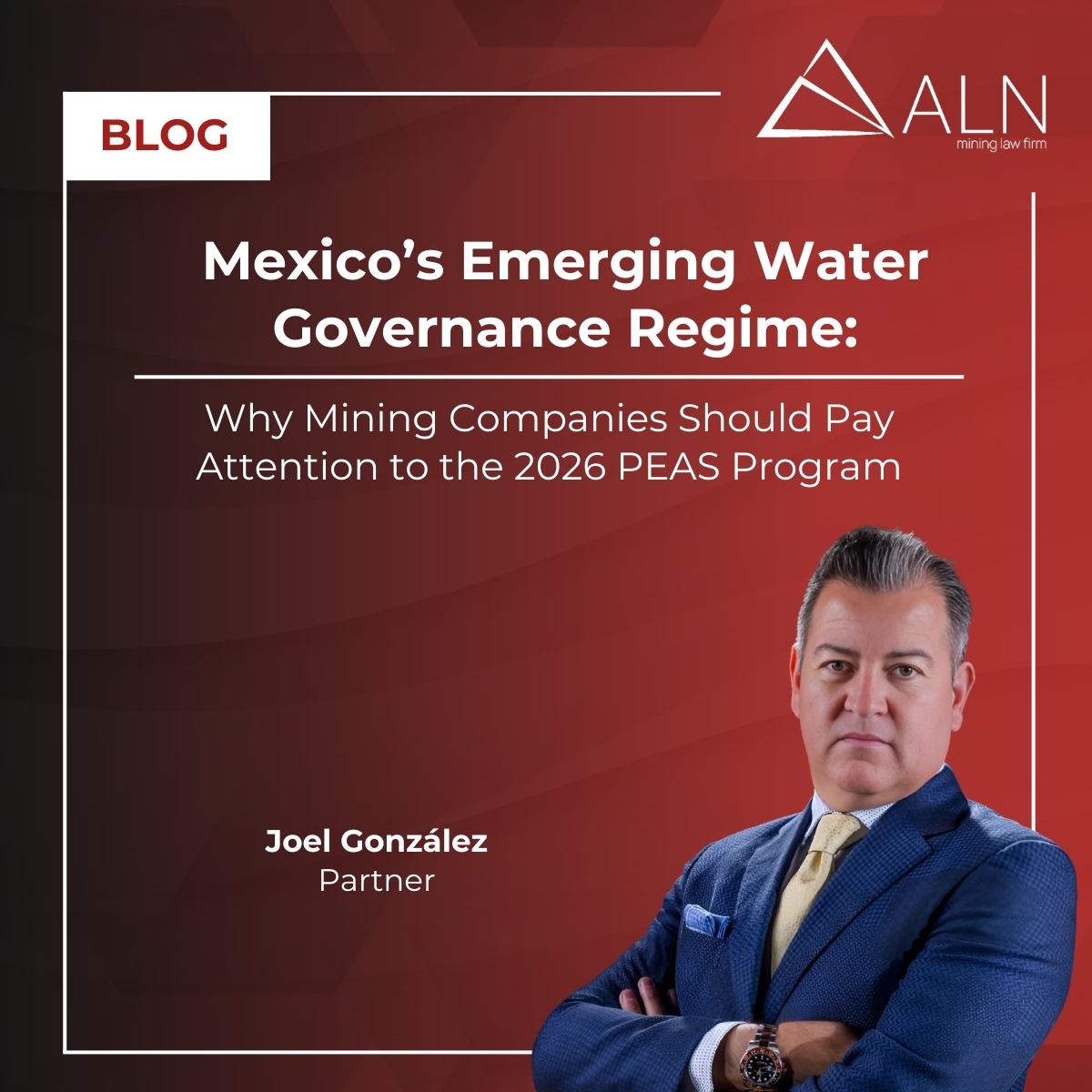
Joel Gonzalez
Partner