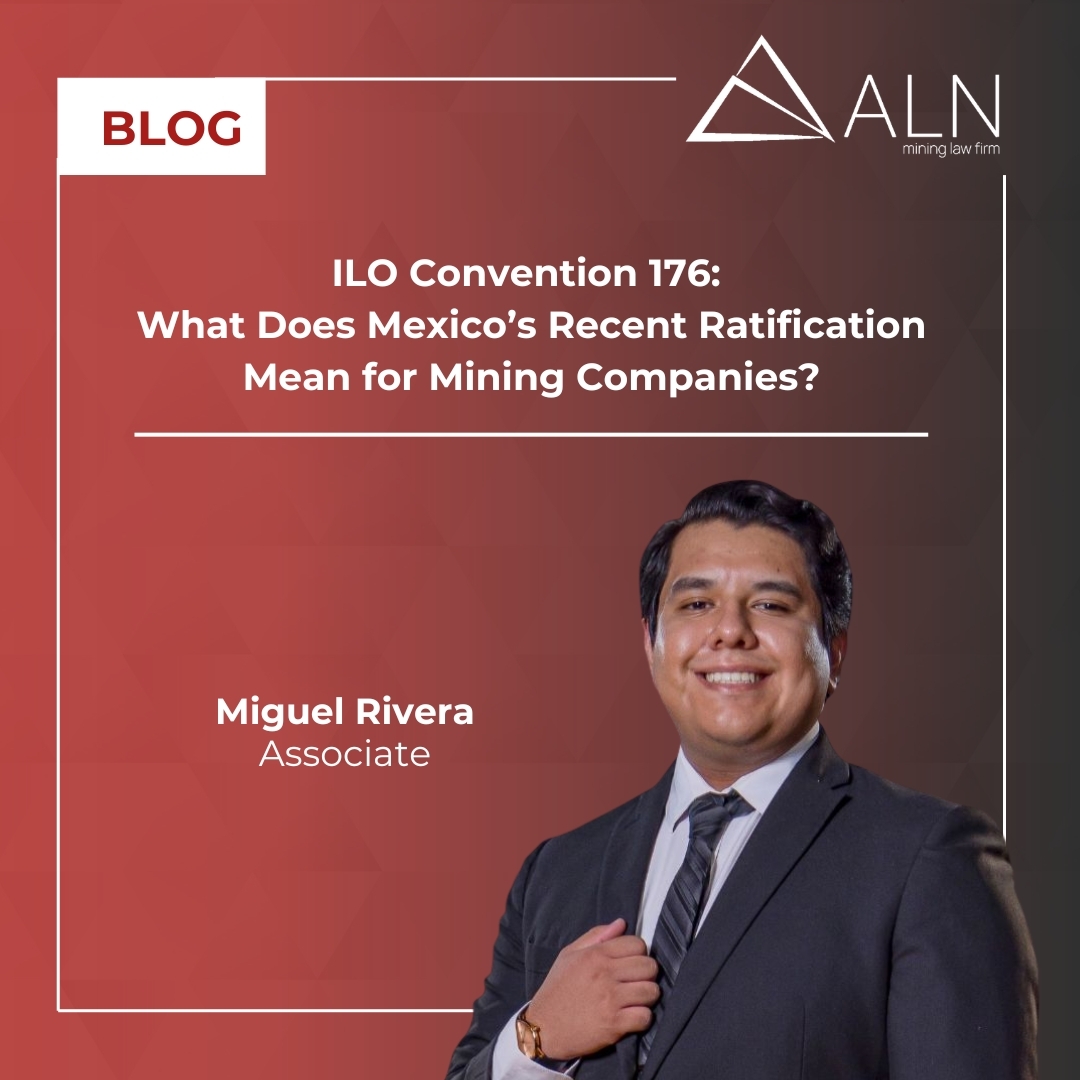
On June 6, 2026, the Government of Mexico deposited with the International Labour Organization (ILO) the instrument of ratification of Convention No. 176 on Safety and Health in Mines, one of the leading international instruments governing mine safety and occupational health.
Pursuant to Article 18 of the Convention, it will enter into force for Mexico twelve months after the date of registration of the ratification, that is, in June 2027.
What Does Convention 176 Regulate?
The Convention establishes minimum standards for the protection of the safety and health of workers engaged in mining activities.
Among its most relevant provisions are:
- The identification, assessment, and control of risks inherent to mining operations.
- The implementation of preventive measures and occupational safety and health management systems.
- The establishment of emergency response, evacuation, and rescue procedures.
- Ongoing training and information for workers.
- Worker participation in matters relating to occupational safety and health.
What Does It Mean for the Mexican Mining Sector?
Although Mexican legislation already provides for various occupational health and safety obligations, the ratification of Convention 176 reinforces the Mexican State’s commitment to maintaining a regulatory framework aligned with internationally recognized mining safety standards.
In practice, this may result in increased attention from regulatory authorities to the effective implementation of health and safety measures in mining operations, as well as to companies’ ability to demonstrate compliance through adequate documentation and recordkeeping.
Likewise, matters such as preventive risk management, training programs, incident investigations, emergency response planning, and worker participation in safety-related matters may become increasingly relevant within inspection and enforcement processes.
Considerations for Mining Companies
In light of the Convention’s upcoming entry into force in Mexico, mining companies should consider proactively reviewing the extent to which their policies, procedures, and internal controls align with the principles set forth in this international instrument.
Particular attention should be given to ensuring that risk identification and management mechanisms, training programs, emergency response protocols, and incident investigation procedures are properly implemented and supported by sufficient documentary evidence.
Final Remarks
Although many of its provisions are already reflected in Mexican legislation, the ratification of Convention 176 sends a clear signal regarding the continued importance of occupational health and safety within the mining sector’s regulatory agenda. In this context, companies may find it timely to review their compliance practices and internal control mechanisms to ensure that their operations are adequately prepared for potential regulatory requirements, inspections, or future regulatory developments.
Miguel Rivera
Associate